
With the Jaypee acquisition, the Suraksha group, which made lenders an offer of Rs 7,736 crore, will be able to expand its footprint in north India after making inroads in Mumbai's real estate market over the past year. Sudhir Valia, the promoter, was a co-founder and executive director of India's biggest pharmaceutical firm, Sun Pharmaceuticals, and is a close relative of Dilip Shanghvi.

If you are a budding developer and interested in Web3, chances are that you will be headed to one of India's largest-ever meetings of Web3 developers, being held by Polygon, a Web3 platform. The company's ongoing "Web3: Made in India Tour" is expected to see close to 4,000 developers coming together at the inaugural Polygon Connect event in Bengaluru on December 1. The event highlights the growing dominance of Web3 developers from India, as well as the sector's rising interest to investors, who continue to invest in startups despite a funds crunch.

Around 75 per cent, or 372 stocks, that are part of the BSE500 are trading at least 10 per cent below their all-time high levels, despite the index hitting a record high 20,515 points on the BSE in intra-day trade on Wednesday, surpassing its previous high of 20,390 touched in March 12. The index, which accounts for 93 per cent of BSE listed companies' market capitalisation, has gained 8 per cent from its recent low of 18,983, touched on April 19. In comparison, the benchmark S&P BSE Sensex gained 6 per cent over the same period, but is still nearly 4.5 per cent away from its all-time high of 52,517 that it hit on February 16.

Siva Prasad Nanduri, chief business officer, TeamLease Digital, outlines the skills that will help you get a job in 2023.

Foreign Direct Investment into India rose by 13 per cent in 2020, boosted by interest in the digital sector, and while fund flows "declined most strongly" in major economies such as the UK, the US and Russia due to the Covid-19 pandemic, India and China "bucked the trend", the UN has said.

Keki Mistry, bottom, left, vice-chairman, Housing Development Finance Corporation (HDFC), tells Joydeep Ghosh that debt fund investors could become risk-averse, leading to problems for other non-banking financial companies.

Banks have written off bad loans worth Rs 10,09,511 crore during the last five financial years, finance minister Nirmala Sitharaman informed Parliament on Tuesday. The non-performing assets (NPAs), including those in respect of which full provisioning has been made on completion of four years, are removed from the balance sheet of the bank concerned by way of write-off, she said in a reply to Rajya Sabha. "Banks write off NPAs as part of their regular exercise to clean up their balance sheet, avail tax benefit and optimise capital, in accordance with RBI guidelines and policy approved by their boards.

Housing sector to benefit from Budget.

As India emerges from the COVID-19 crisis, the ninth budget under the Modi government, including an interim one, is widely expected to focus on boosting spending on job creation and rural development, generous allocations for development schemes, putting more money in the hands of the average taxpayer and easing rules to attract foreign investments.

Experts say this is a good time to buy a house for self-use, points out Sanjay Kumar Singh.

Ajit Mishra, vice president, Research, Religare Broking, answers your queries.

The railway minister has steered clear of populist traps and refrained from making grandiose announcements in terms of new trains and new rail routes. He should now emulate China, and rope in Japan in boosting the rail network, says Rajeev Sharma.

The forthcoming budget is an excellent opportunity for the Government to fulfill its promise of high economic growth.

'The real estate sector has been badly bruised because it has become too reliant on funding from NBFCs, including housing finance companies. 'When the NBFC industry was rocked late last year by a large default, the real estate sector was hit hard. 'An intricate web of links between rural incomes, construction activity and shadow banks are fuelling the economic slowdown', says Pranjul Bhandari.

One of Mumbai's biggest real estate redevelopment projects of Bombay Development Directorate's (BDD's) chawls (large buildings divided into many separate tenements, offering cheap, basic accommodation) has taken off in Central Mumbai, opening up a Rs 20,000-crore opportunity for real estate companies. It is expected to drive down real estate prices in Central Mumbai by up to 25 per cent, forecast real estate experts. Spread over 92 acres in Central Mumbai's prime localities of Worli, Lower Parel, and Dadar and consisting 195 four-storey houses, the BDD chawls were constructed in the 1920s.

The average time lag between the date of occurrence of a fraud and its detection is 23 months; for large frauds (Rs 100 crore and above), it was 57 months.

Of the 40 CEOs polled from across the country, 60 per cent identified a fractured electoral mandate as a bigger risk than trade wars, volatile oil prices, and inflation.

The Rail Land Development Authority has invited online bids from private players to redevelop the station into an integrated commercial, retail, and hospitality hub.

There was no relief for existing home buyers who are stuck in stalled projects and are paying both rent and EMI on their home loans.

'Strong regulations are crucial for the orderly development of the market.'

'The entire value of LIC is created by its shareholders because after the initial invest net of Rs 5 crores in 1956, the government has not given any additional capital to the LIC.' 'If the corporation has expanded and emerged as the biggest financial institution in the country, it is only because of the policyholders.'

The government has brought in changes to the investment pattern for non-government provident funds, and superannuation and gratuity funds, enabling them to invest up to 5 per cent in the units of Category I and Category II alternative investment funds (AIFs), subject to some caveats. The development is part of the central government's strategy to channelise domestic savings and improve their returns to attract more investment in the said sectors. At present, these funds typically invest a minimum 45 per cent in government securities, besides new instruments, such as exchange-traded funds and real estate investment funds, while a portion in equity-related instruments.

Even as India's internet base continues to widen, with the country set to have over 900 internet users by 2025, a parallel rise in cyber threats has become a matter of huge concern. Experts say that the sudden surge in digital adoption left little time to develop a cybersecurity backbone for the country. This has put large amounts of data at risk.
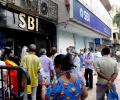
Amendments would be required in the Banking Companies (Acquisition and Transfer of Undertakings) Act, 1970 and the Banking Companies (Acquisition and Transfer of Undertakings) Act, 1980 for privatisation, sources said.

The race to get a New Umbrella Entity (NUE) licence for digital payments may get crowded. As many as six consortiums are said to be in the fray to apply for an NUE licence, which would create a for-profit National Payments Corporation of India (NPCI)-like body for retail payments. A consortium led by Financial Software and Systems (FSS), a leading provider of payment products and payment processor, is in talks and may file an application to the RBI for an NUE license, said sources aware of the development. The other constituents of this group include Indian Bank, Central Bank of India, India Post Payments Bank, National Bank for Agriculture and Rural Development (Nabard), and a few small finance banks.

Exuding confidence in sustaining the tempo of credit growth, public sector bankers said on Wednesday that consolidation in the public sector bank (PSB) space has given them a robust base to scale. The privatisation of PSBs can be done through divestment of government stake to a wider base of investors without haste. There is nothing to worry about at this point (high credit offtake) as underwriting standards and risk management are much better.

Here's the full text of Prime Minister Narendra Modi's address to a joint session of the United States Congress, delivered on Thursday.

Budget might turn out to be neutral for the sector.

When an NRI returns to India, he should be aware of his tax residency status.

Payments banks are niche banks which will be allowed to function with several restrictions.

'The 5.7% growth in the April-June period is an aberration because of GST.' 'Business activity in the last 15 days of the quarter was minimal or zero.'

In the broader market, the S&P BSE Midcap and the S&P BSE Smallcap indices gained 0.5% and 0.4%, respectively.

Select companies in infra, capital goods, private banks, auto, oil & gas, and mining could be considered by investors.

Of the three major Budget announcements related to the banking sector, privatisation of PSBs is the most audacious, says Tamal Bandyopadhyay.

The government would be ironing out issues related to the controversial 'bail-in' clause in the earlier Bill, explore hiking the deposit insurance cover of customers, and decide whether the resolution framework should apply to public sector banks.

Sounding a note of caution, former Reserve Bank Governor Raghuram Rajan has said that India is "dangerously close" to the Hindu rate of growth in view of subdued private sector investment, high interest rates and slowing global growth. Rajan said that sequential slowdown in the quarterly growth, as revealed by the latest estimate of national income released by the National Statistical Office (NSO) last month, was worrying. Hindu rate of growth is a term describing low Indian economic growth rates from the 1950s to the 1980s, which averaged around 4 per cent.

'Short term volatility is likely due to various factors, global and domestic; investors may use this as an opportunity to increase the allocation to equities.'

Developers grappling with labour shortage and getting construction material to sites could be among a list of problems.

If a retail investor wants exposure to a healthcare ETF, it should be a part of his satellite portfolio, suggests Sanjay Kumar Singh.

Japan offers India soft loan for $15 bln bullet train in edge over China
 © 2026 Rediff.com - Advertise with us - Disclaimer - Privacy Policy - Sitemap - Feedback - About us - Terms of use - Grievances